Italy High-Speed Trains: Frecciarossa vs Italo and First Class Guide
There is a moment on an Italy high speed train, somewhere between Milan and Florence, when the hills of Emilia-Romagna slide past the window at close to 300 kilometres an hour and the appeal becomes obvious. No airport queues, no security lines, no transfers from distant terminals. You board in the centre of one city, order an espresso, and step off in the centre of another.
Italy’s high-speed network links Turin, Milan, Venice, Bologna, Florence, Rome and Naples, and first class on it often costs less than a business class flight on the same route. This guide compares the two operators, Frecciarossa and Italo, explains every class on board, and covers journey times, fares, luggage rules, strikes and how to book for a comfortable trip.
Last checked: October 2026. Fares, timetables and on-board services change regularly, so confirm the details with the operator before you book.
Frecciarossa vs Italo: The Short Answer
Choose Frecciarossa (Trenitalia) for the most departures, the widest network, rail pass acceptance and the Executive class. Choose Italo for competitive advance fares, a design-led cabin and generous luggage rules in its upper classes. On the main Milan, Florence, Rome and Naples corridor both are equally fast, so the best choice usually comes down to the price and departure time on your date.
Italy’s High-Speed Trains at a Glance
- Frecciarossa is run by Trenitalia, the state railway. It has the largest network and the most frequent departures.
- Italo is run by the private company NTV (Nuovo Trasporto Viaggiatori), which launched in 2012 with burgundy trains and a strong focus on design and value.
Both run at up to 300 km/h in service on the same dedicated lines, and both offer free Wi-Fi, power sockets and several classes of travel. Competition between them has kept fares keen and service standards high.
| Frecciarossa | Italo | |
|---|---|---|
| Operator | Trenitalia (state) | NTV (private) |
| Top service speed | 300 km/h | 300 km/h |
| Network | Largest, includes cities off the main spine | Main high-speed corridors |
| Classes | Standard, Premium, Business, Executive | Smart, Prima Business, Club Executive |
| Top class | Executive (up to 10 seats, Frecciarossa 1000 and ETR 500 trains only) | Club Executive, with an optional private Salotto |
| Station lounges | FrecciaLounge, included with Executive and Salottino tickets | Italo Club Lounge, included with Club Executive and available as an add-on in other classes |
| Luggage | No strictly enforced limit, but bags must go in the racks | Smart: each bag max 75 x 53 x 30 cm. No size limit in Prima Business or Club Executive |
| Fare types | Base, Economy, Super Economy | Flex, Economy, Low Cost |
| Eurail and Interrail passes | Accepted, with a paid seat reservation | Not accepted |
Main Routes and Journey Times
The high-speed spine runs from Turin and Milan in the north through Bologna, Florence and Rome to Naples and Salerno in the south, with a branch from Milan to Verona and Venice. The fastest scheduled journey times are roughly:
| Route | Fastest services, approx. |
|---|---|
| Milan to Rome | 2 hours 55 minutes (non-stop), most trains 3 hours 10 minutes or more |
| Milan to Florence | 1 hour 55 minutes |
| Rome to Florence | 1 hour 30 minutes |
| Rome to Naples | 1 hour 10 minutes on the fastest trains |
| Milan to Venice | 2 hours 15 to 2 hours 30 minutes |
| Florence to Venice | 2 hours 5 minutes |
| Rome to Venice | 3 hours 45 minutes |
| Florence to Naples | 2 hours 40 minutes |
| Milan to Turin | 50 minutes to 1 hour |
These are the quickest services. Trains with more stops take longer, and engineering works sometimes add time, especially at weekends. For most journeys under four hours the train still beats flying door to door, because Milano Centrale, Roma Termini, Firenze Santa Maria Novella, Venezia Santa Lucia and Napoli Centrale are all in or near the city centre. Some services use Roma Tiburtina, Milano Porta Garibaldi or Milano Rogoredo instead, so always check your departure station.
Frecciarossa Classes Explained
Frecciarossa’s flagship Frecciarossa 1000 trains are among the fastest in Europe. Most Frecciarossa trains offer four service levels, although seat layouts and some services vary by train type, so treat the details below as typical rather than guaranteed.
Standard
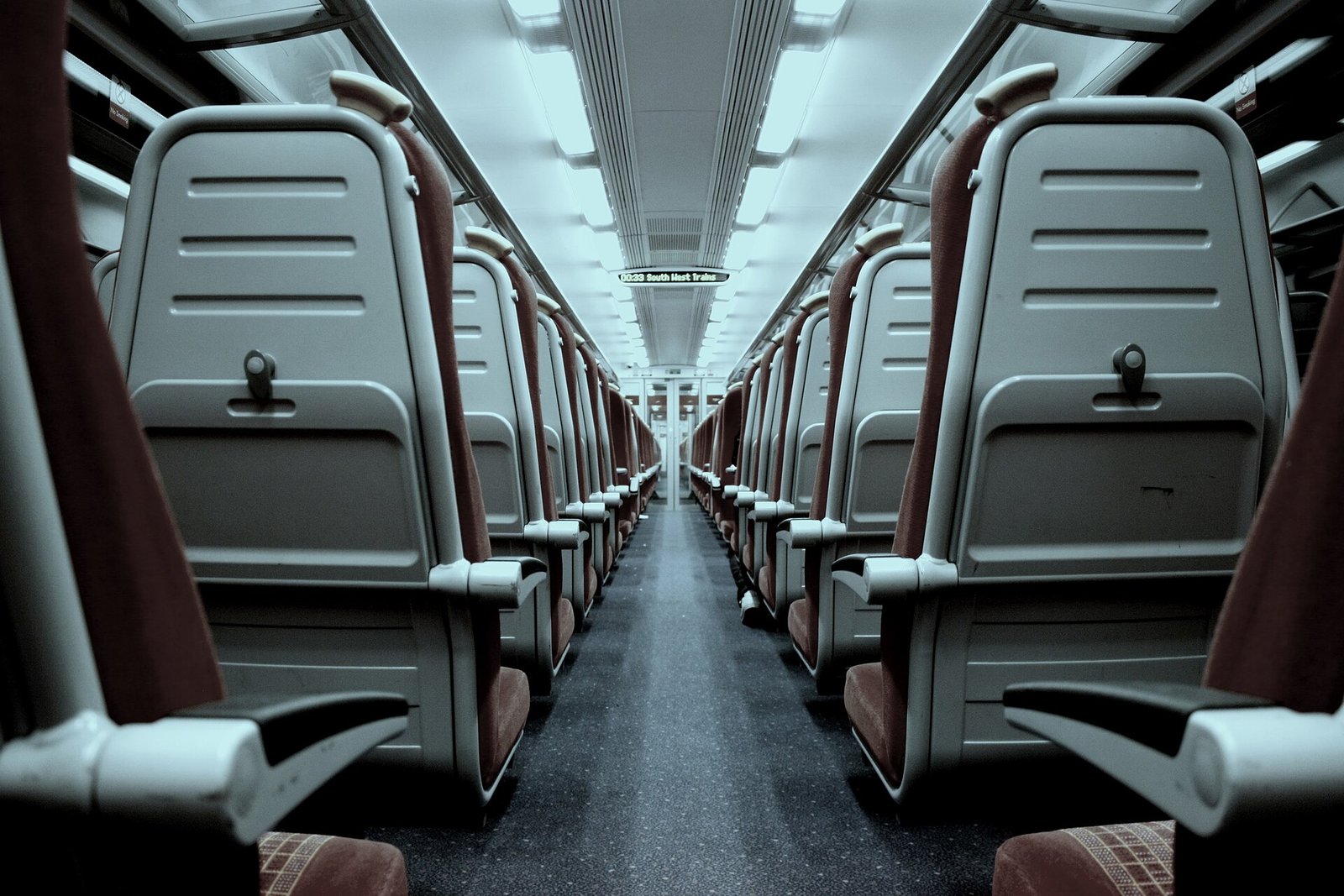
Reclining seats in a 2+2 layout with power sockets and Wi-Fi. Comfortable for short trips and families on a budget, and there is a bar carriage for coffee and snacks.
Premium
Usually a 2+2 layout with leather seats, a little more space and a complimentary welcome drink and snack. A good middle ground when the price gap to Business is large.
Business
Trenitalia’s first class equivalent: wider leather seats, usually in a 2+1 layout, more legroom, a calmer carriage and a welcome drink and snack. Many trains have a quiet Business Area Silenzio. On ETR 500 trains you can also book a Salottino, a private four-seat compartment that suits families or small groups, and Salottino tickets include FrecciaLounge access.
Executive
Trenitalia’s top class, available only on Frecciarossa 1000 and ETR 500 trains. The Executive carriage has up to ten individual leather armchairs, a five-seat meeting room, a dedicated attendant, a meal served at your seat with an open bar, Fast Track entry at the main stations in Rome and Milan, and FrecciaLounge access at major stations such as Milano Centrale, Roma Termini, Firenze Santa Maria Novella and Venezia Santa Lucia.
What it feels like in practice: the carriage is hushed and almost empty compared with the rest of the train, the seats swivel and recline deeply, and service arrives without you having to ask. It is closer to an airline lounge than a railway carriage. With so few seats, Executive sells out early on popular routes.
Italo Classes Explained
Italo runs Alstom AGV trains and the newer Italo EVO fleet. It now sells three classes. You may still see older references to a separate Comfort class or to plain Prima; Italo’s current names are Smart, Prima Business and Club Executive.
Smart
Italo’s standard class, with reclining leather seats, footrests, side tables, power sockets and free Wi-Fi. The cheapest advance fares are usually in Smart. Note the luggage limit: each bag must be no larger than 75 x 53 x 30 cm.
Prima Business
Wider seats with extra legroom and a welcome service of snacks, coffee and drinks brought to your seat. There is no size limit on luggage, which makes it a practical choice if you travel with large suitcases. Lounge access can be added when you book.
Club Executive
Italo’s top class has spacious leather armchairs, at-seat catering ranging from espresso to prosecco and light dishes, free access to the Italo Club Lounge, Fast Track entry and no luggage size limit. Within Club Executive you can book the Salotto, a private area that works well for a couple travelling with friends, a family or a small business meeting.
Frecciarossa vs Italo: Which Should You Choose?
Both operators are excellent, and for most travellers the decision comes down to timing and price on the day you want to travel.
Choose Frecciarossa if you:
- Want the most departures and the widest choice of routes, including cities beyond the main high-speed spine
- Are travelling on a Eurail or Interrail pass, which Italo does not accept
- Want the Executive class experience and FrecciaLounge access
- Are connecting to regional or Intercity trains on a single Trenitalia booking
Choose Italo if you:
- Want the lowest advance fare on a specific train
- Prefer a design-led, modern cabin
- Travel with large suitcases and want Prima Business or Club Executive, which have no luggage size limit
- Collect points with the Italo Più loyalty programme
Our Pick by Type of Traveller
- Couples: Frecciarossa Business or Italo Prima Business for everyday comfort. Book two seats together on the paired side, or two singles facing each other for a quieter trip.
- Families: a Frecciarossa Salottino on ETR 500 trains or Italo’s Club Executive Salotto gives you a private space. Both operators also run family offers with large child discounts, so check those before paying full fare.
- Business travellers and solo luxury travellers: Frecciarossa Executive or Italo Club Executive, for the lounge, the quiet carriage and service at your seat.
- Budget-minded first class: book Business or Prima Business as early as possible, when the gap over standard class is often small.
How Much Do Italian High-Speed Train Tickets Cost?
Italian high-speed fares work much like airline fares: they are dynamic, and they rise as the departure date approaches and seats sell out. The ranges below are indicative early-booking prices, not quotes, and last-minute fares can be two to three times higher.
| Route | Standard / Smart | Business / Prima Business | Executive / Club Executive |
|---|---|---|---|
| Milan to Rome | About 20 to 40 euros | About 50 to 80 euros | About 90 to 150 euros |
| Rome to Florence | About 15 to 30 euros | About 35 to 60 euros | About 60 to 110 euros |
| Rome to Naples | About 10 to 25 euros | About 30 to 50 euros | About 50 to 90 euros |
| Milan to Venice | About 15 to 30 euros | About 35 to 60 euros | About 60 to 110 euros |
| Florence to Venice | About 15 to 30 euros | About 35 to 60 euros | About 60 to 100 euros |
Even at the higher end, first class on an Italian high-speed train usually costs less than a business class flight on the same route, and you skip the airport transfers entirely.
Fare Types and Change Rules
- Trenitalia Base / Italo Flex: the most flexible fares. Changes are allowed and refunds are possible, minus a fee.
- Trenitalia Economy / Italo Economy: cheaper, with limited changes (usually by paying the difference to the flexible fare) and generally no refund.
- Trenitalia Super Economy / Italo Low Cost: the cheapest seats, in limited numbers, and normally neither changeable nor refundable.
If your plans might move, a flexible fare is often worth the extra cost. Trenitalia has also offered an optional low-cost refund add-on for some discounted fares at the time of booking, so look for it when you enter passenger details. Full conditions are on the Trenitalia fares page.
How to Book Italian Trains
- Book direct with the operators. Trenitalia and Italo both have official websites and apps in English, and fares are usually lowest there. Comparison platforms such as Trainline show both operators side by side but may add a booking fee.
- Book early. Trenitalia usually releases Frecciarossa seats around four to six months ahead, while Italo often opens sales a little later. The cheapest fares and the few Executive seats sell out first.
- Choose your seat. In Business and Prima Business, single seats on the one-seat side of the carriage are the most private.
- Use digital tickets. Your ticket arrives by email and in the app with a booking code. High-speed tickets are for a specific train and seat, so there is no need to validate them, unlike some paper regional tickets.
- Join the loyalty programmes. Trenitalia’s CartaFRECCIA and Italo Più are free to join and can bring discounts, upgrades and lounge access over time.
Luggage Rules on Italian High-Speed Trains
- Italo Smart: each bag must be no larger than 75 x 53 x 30 cm. Larger bags are not accepted in this class.
- Italo Prima Business and Club Executive: no size limit and no extra charge for large luggage.
- Frecciarossa: there is no strictly enforced size or weight limit at present. Trenitalia announced a two-bag rule in 2024 but suspended it, so check the latest conditions before travelling with a lot of luggage.
- On every train: bags must go in the racks at the carriage ends, overhead or between seats, never in aisles or doorways. Luggage is free on both operators.
Travelling light makes everything easier, from station stairs to narrow racks, as we explain in what to pack for a luxury vacation.
Train Strikes and Disruption in Italy
Rail strikes (scioperi) are a real part of travel in Italy. They are announced in advance and often run for 24 hours, sometimes starting the evening before.
- Check before you book. Trenitalia and Italo publish upcoming strikes and lists of guaranteed high-speed trains on their websites and apps.
- Know the guaranteed windows. On weekdays, regional trains are protected from 6am to 9am and 6pm to 9pm. High-speed services are covered by the operators’ own lists of guaranteed trains instead.
- Plan a buffer. On a strike day, avoid relying on the last train of the evening or a tight connection to a flight.
- Know your rights. If your train is cancelled because of a strike, you can usually claim a refund or travel on an equivalent service.
Travelling With Children or Reduced Mobility
Both operators offer family fares in which children travel free or at a large discount, and pushchairs can be carried on board. Infants who sit on a parent’s lap generally travel free. Passengers with reduced mobility can request free assistance at major stations through RFI’s Sala Blu service for Trenitalia trains, and through Italo’s customer service for Italo trains. Request help as far ahead as you can, ideally at least a day before travel.
Tips for a Smooth Journey
- Arrive 15 to 20 minutes early. Platforms are announced only shortly before departure on the station boards, and large stations such as Milano Centrale and Roma Termini can be busy.
- Have your ticket ready at the gates. Major stations have barriers before the high-speed platforms.
- Use the lounges. If you travel Executive or Club Executive, arrive early and wait in the FrecciaLounge or Italo Club Lounge rather than on the busy concourse.
- Pick your side for the view. Between Florence and Rome, the countryside is attractive on both sides, but much of the line between Bologna and Florence runs through tunnels.
- Mix fast and slow. High-speed trains link the big cities, while slower regional trains open up the countryside. Our guide to slow travel destinations has ideas for unhurried itineraries.
A Classic Italian Rail Itinerary
For a first trip, a classic route might look like this:
- Venice for two or three nights, arriving by train directly onto the Grand Canal.
- Florence, about two hours away, for art, Renaissance architecture and day trips into Tuscany.
- Rome, about 90 minutes from Florence, for history, food and grand hotels.
- Naples and the Amalfi Coast, around 70 minutes from Rome on the fastest trains, continuing by car or ferry.
That is under five hours of train time in total, and travelling first class makes each leg part of the holiday. For the kind of hotel worth choosing at each stop, see our guide to what makes a hotel five-star.
Frequently Asked Questions
What is the fastest train in Italy?
The Frecciarossa 1000 and Italo’s AGV and EVO trains run at up to 300 km/h in commercial service on Italy’s high-speed lines.
Is first class worth it on Italian trains?
Often, yes. Booked early, Business or Prima Business can cost only a little more than standard class, for wider seats and a quieter carriage. Executive and Club Executive add lounge access and service at your seat, usually for less than a business class flight.
Do I need to validate my high-speed train ticket in Italy?
No. Frecciarossa and Italo tickets are for a specific train and seat, so they do not need validating. Some regional paper tickets do.
Can I use a Eurail or Interrail pass on Italian high-speed trains?
Yes on Frecciarossa, but you must also buy a paid seat reservation. Italo does not accept Eurail or Interrail passes.
How much luggage can I take on Italian high-speed trains?
Luggage is free on both operators. In Italo Smart, each bag must be no larger than 75 x 53 x 30 cm; Italo’s higher classes have no size limit. Frecciarossa has no strictly enforced limit, but bags must fit in the racks.
What happens if there is a train strike in Italy?
Operators publish lists of guaranteed trains ahead of each strike. If your train is cancelled, you can usually get a refund or travel on an equivalent service.
Which is cheaper, Italo or Frecciarossa?
Neither is always cheaper. Prices are dynamic, so compare both operators for your specific train and date.
Final Thoughts
Italy’s high-speed trains make it easy to link Venice, Florence, Rome and Naples in a single trip. Choose Frecciarossa for its network, rail pass acceptance and Executive class, or Italo for its fares, modern cabins and relaxed luggage rules in Prima Business and Club Executive. Book early, check for strikes, travel light and let the journey become part of the holiday.
For official timetables, fares and class details, see Trenitalia and Italo’s travel classes.