Lab-Grown vs Natural Diamonds: Value, Resale and Which to Buy
A few years ago, choosing a diamond meant choosing between cuts, colors and carat weights. Today the first question is more fundamental: should it come from the earth or from a laboratory?
Lab-grown diamonds have moved from novelty to mainstream at remarkable speed. They are now a major part of the engagement ring market in the United States, and prices have fallen dramatically. Yet many buyers still feel uncertain. Are they real diamonds? Will they hold their value? And is a natural diamond still worth the premium?
This guide compares lab-grown vs natural diamonds honestly: how they are made, how they differ, what they cost, how they resell and which makes more sense for your purchase.
The short answer: lab-grown and natural diamonds are the same material and look identical to the eye. Lab-grown diamonds cost a fraction of the price but have very little resale value. Natural diamonds cost far more, are rarer and hold some value, though they are not a guaranteed investment.
Are Lab-Grown Diamonds Real Diamonds?
Yes. A lab-grown diamond is a real diamond, not a simulant like cubic zirconia or moissanite. It has the same chemical composition (pure carbon), the same crystal structure, the same hardness and the same brilliance as a natural diamond. The US Federal Trade Commission revised its Jewelry Guides in 2018 to recognize that a diamond does not have to come from the earth to be called a diamond, provided it is clearly described as lab-grown, laboratory-created or similar.
The difference is origin. Natural diamonds formed deep within the earth over hundreds of millions to billions of years. Lab-grown diamonds are created in weeks using technology that recreates the conditions in which diamonds form.
How lab-grown diamonds are made
- HPHT (high pressure, high temperature): a carbon source is subjected to intense heat and pressure, imitating the conditions deep underground.
- CVD (chemical vapor deposition): carbon-rich gases are broken down in a chamber, and carbon atoms build up layer by layer on a diamond seed.
Both methods produce genuine diamond crystals that are then cut and polished exactly like natural stones.

Can You Tell the Difference?
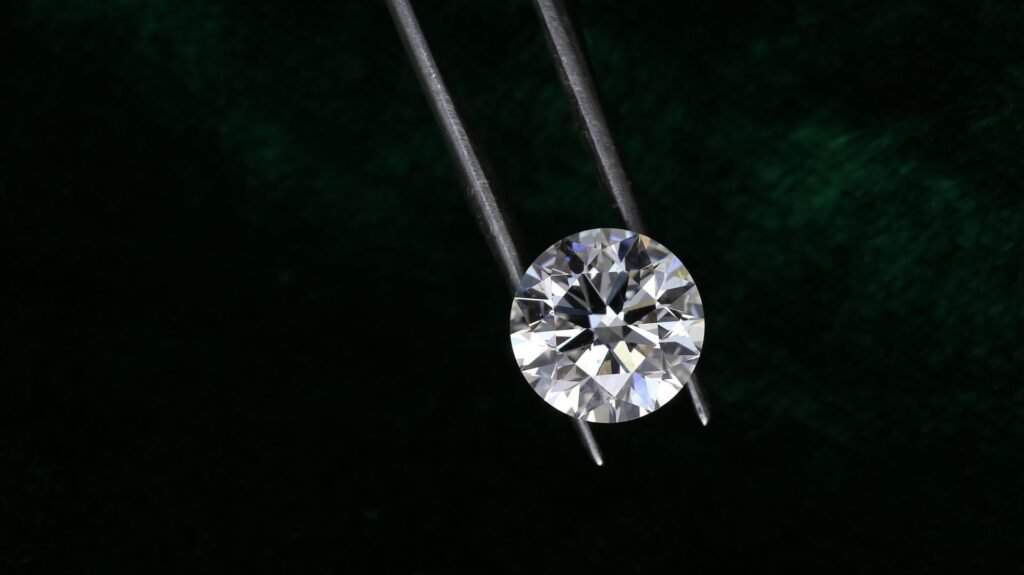
Not with the naked eye. Even experienced jewelers cannot reliably tell a lab-grown diamond from a natural one simply by looking at it. Identification requires specialized laboratory equipment that detects subtle differences in growth patterns and trace elements.
This is why grading reports matter. Reputable laboratories such as the GIA (Gemological Institute of America) and IGI (International Gemological Institute) identify whether a diamond is natural or lab-grown, and many laser-inscribe the girdle of lab-grown stones to make their origin clear.
It is worth knowing that GIA changed its approach to lab-grown diamonds on October 1, 2025. Instead of separate color and clarity grades, GIA now describes a lab-grown stone simply as Premium or Standard, and stones below its minimum quality receive no assessment at all. IGI continues to issue full 4Cs reports for lab-grown diamonds, which makes individual stones easier to compare.
Lab-Grown vs Natural Diamonds: Side by Side
| Lab-grown diamond | Natural diamond | |
|---|---|---|
| Material | Pure carbon, real diamond | Pure carbon, real diamond |
| Appearance | Identical to the eye | Identical to the eye |
| Hardness | 10 on the Mohs scale | 10 on the Mohs scale |
| Origin | Created in weeks in a laboratory | Formed over millions of years in the earth |
| Rarity | Can be produced in large quantities | Finite, increasingly rare in large sizes |
| Price | A small fraction of natural | Far higher, especially above one carat |
| Price trend | Falling steeply in recent years | Under pressure, but much more stable |
| Resale value | Very low | Some resale value, usually well below retail |
| Grading | IGI full reports; GIA simplified descriptions | GIA and IGI full 4Cs reports |
How Much Do Lab-Grown and Natural Diamonds Cost?
This is where the difference becomes dramatic. Lab-grown diamond prices have collapsed as production has scaled up. When De Beers announced it was closing its Lightbox brand in 2025, it said lab-grown prices had fallen by around 90 percent at wholesale since 2018. Today a well-cut one-carat lab-grown diamond typically sells for roughly $600 to $1,500 at retail, depending on quality and retailer.
A comparable one-carat natural diamond usually costs $3,500 to $6,000, and the gap widens quickly with size. Natural prices rise steeply per carat because large rough stones are genuinely rare, while lab-grown prices stay almost flat per carat because a laboratory can simply grow a bigger crystal.
Lab-grown vs natural diamond prices by carat
| Carat weight | Lab-grown (typical retail) | Natural (typical retail) | Lab-grown saving |
|---|---|---|---|
| 1 carat | $600 – $1,500 | $3,500 – $6,000 | About 75–85% |
| 2 carats | $1,200 – $3,500 | $15,000 – $25,000 | About 85–90% |
| 3 carats | $1,800 – $6,000 | $30,000 – $60,000 | About 90% or more |
That difference means a buyer with the same budget can choose a much larger lab-grown diamond, or put the savings toward a better setting, a matching wedding band or simply something else entirely.
Do Diamonds Hold Their Value?
This is the most misunderstood part of the decision.
Lab-grown diamonds
Because lab-grown diamonds can be produced in ever greater quantities and prices continue to fall, their resale value is very low. Many jewelers will not buy them back at all, and those that do typically offer only a small fraction of the original price. If resale matters to you, a lab-grown diamond is not the right choice.
Natural diamonds
Natural diamonds do hold some value, but it is important to be realistic. Resale prices are usually well below the retail price you paid, often far below half, because retail prices include significant mark-ups. Rare stones, such as large, top-quality or colored diamonds, and signed pieces from major jewelry houses tend to perform best.
The natural diamond market itself has been under pressure as lab-grown stones have taken market share. De Beers, the world's most famous diamond company, announced in May 2025 that it would close Lightbox, its own lab-grown jewelry brand, and refocus on natural diamonds.
In other words, neither type is a reliable financial investment. Buy a diamond because you love it, not because you expect it to grow in value. The same principle applies to many luxury purchases, as we discuss in our guides to luxury handbags that hold their value and whether the Cartier Love bracelet is worth it.
Ethics and Sustainability
Both sides make strong claims, and the truth is nuanced.
- Lab-grown diamonds avoid mining and conflict concerns, but their production uses significant energy. Their environmental footprint depends heavily on whether the laboratory runs on renewable energy, so look for producers that are transparent about their energy sources and certifications.
- Natural diamonds support jobs and economies in producing countries such as Botswana, Namibia and Canada. The Kimberley Process aims to prevent conflict diamonds from entering the market, and many responsible jewelers offer traceable, origin-certified natural stones.
If ethics are important to you, ask your jeweler about origin, certification and traceability, whichever type you choose.
Which Should You Buy?
Choose a lab-grown diamond if:
- You want the biggest, most brilliant diamond for your budget
- You care more about appearance than rarity or origin story
- You do not expect to sell the diamond later
- You are buying fashion jewelry, earrings or tennis bracelets where size and sparkle matter most
Choose a natural diamond if:
- Rarity and the idea of a stone formed over millions of years matter to you
- You value tradition, especially for an engagement ring or heirloom
- You want a stone that retains some resale value
- You are buying a significant, high-quality stone from a respected house
Many couples now choose lab-grown diamonds for engagement rings and save the difference for travel or a home, while others feel strongly that only a natural diamond carries the right meaning. Both choices are valid.
How to Buy a Diamond Wisely
- Always ask for a grading report from a respected laboratory such as GIA or IGI.
- Check the inscription on the girdle and make sure it matches the report.
- Focus on cut quality, which has the biggest impact on sparkle.
- Compare prices across reputable retailers, especially for lab-grown stones, where prices vary widely.
- Read the return and buyback policies carefully before you buy.
- Consider the setting as part of the overall look and value. A beautifully made setting from a great jeweler can matter as much as the stone. This idea of lasting quality is central to quiet luxury brands.
Best-value specs to target
You do not need top grades in every category to get a beautiful diamond. These targets give the most visible beauty for the money:
- Cut: Excellent (or Ideal). This is the one grade not to compromise on, because cut decides how much the stone sparkles.
- Color: G–H for a natural diamond in white gold or platinum; H–J looks perfectly white in yellow or rose gold. With lab-grown, D–F costs only a little more, so many buyers go higher.
- Clarity: VS2 or an eye-clean SI1. Higher clarity grades are rarely visible without magnification.
- Carat: for natural diamonds, look just below popular weights, such as 0.90 instead of 1.00 carat. The size difference is invisible, but the price difference can be significant.
- Report: GIA or IGI for natural stones; IGI if you want full 4Cs detail on a lab-grown stone.
Frequently Asked Questions
Is a lab-grown diamond a real diamond?
Yes. Lab-grown diamonds have the same chemical, physical and optical properties as natural diamonds. The difference is their origin.
Do lab-grown diamonds hold their value?
No, not really. Lab-grown diamond prices have fallen sharply, and their resale value is very low. They are best bought for enjoyment rather than value.
Can a jeweler tell if a diamond is lab-grown?
Not by eye. Specialist laboratory equipment is needed to confirm whether a diamond is natural or lab-grown, which is why grading reports and girdle inscriptions are important.
Will a lab-grown diamond pass a diamond tester?
Yes. Handheld diamond testers measure how a stone conducts heat or electricity, and a lab-grown diamond responds exactly like a natural one because it is diamond. A tester can catch simulants such as cubic zirconia, and a multi-tester can usually flag moissanite, but only a gem laboratory can confirm whether a diamond is natural or lab-grown.
Do lab-grown diamonds get cloudy over time?
No. A lab-grown diamond is as stable as a natural one and will not fade, change color or turn cloudy. If any diamond starts to look dull, the cause is almost always oil and dirt on its surface, which a gentle clean with warm water, mild soap and a soft brush will remove.
Is IGI or GIA better for lab-grown diamonds?
For natural diamonds, GIA remains the benchmark. For lab-grown diamonds, an IGI report currently gives more detail, with full color, clarity and cut grades, while GIA only states Premium or Standard. Whichever lab you choose, look up the report number on the lab’s website and make sure it matches the inscription on the stone.
Are lab-grown diamonds more ethical?
They avoid mining, but they require significant energy to produce. Their environmental impact depends on how they are made. Responsibly sourced natural diamonds can also be an ethical choice.
Are natural diamonds a good investment?
Generally no. Natural diamonds retain some value but usually resell for much less than their retail price. Only rare, exceptional stones tend to perform well over time.
Final Thoughts
The choice between lab-grown and natural diamonds is no longer about real versus fake. Both are real diamonds that sparkle identically. Lab-grown diamonds offer extraordinary value and size for the money, while natural diamonds offer rarity, tradition and some retained value. Decide what matters most to you, buy from a trusted jeweler with proper certification, and choose the diamond that feels right when you look at it, because that is what will matter for the years you wear it.
Keep reading: if you are weighing another major luxury purchase, see our honest guides on whether the Cartier Love bracelet is worth it, whether a Rolex is worth it and luxury handbags that hold their value. For more on diamond grading, visit the Gemological Institute of America.